Project
Kachi
An onchain trading platform for Korean retail traders.
Kachi.xyz
Kachi (같이) is an onchain trading platform for Korean retail traders.
The Thesis
Korean retail traders love high-risk, high-return assets.
Memecoins are a perfect fit for that taste, and the West has already proven that this category can pull incredible attention and be surprisingly sustainable.
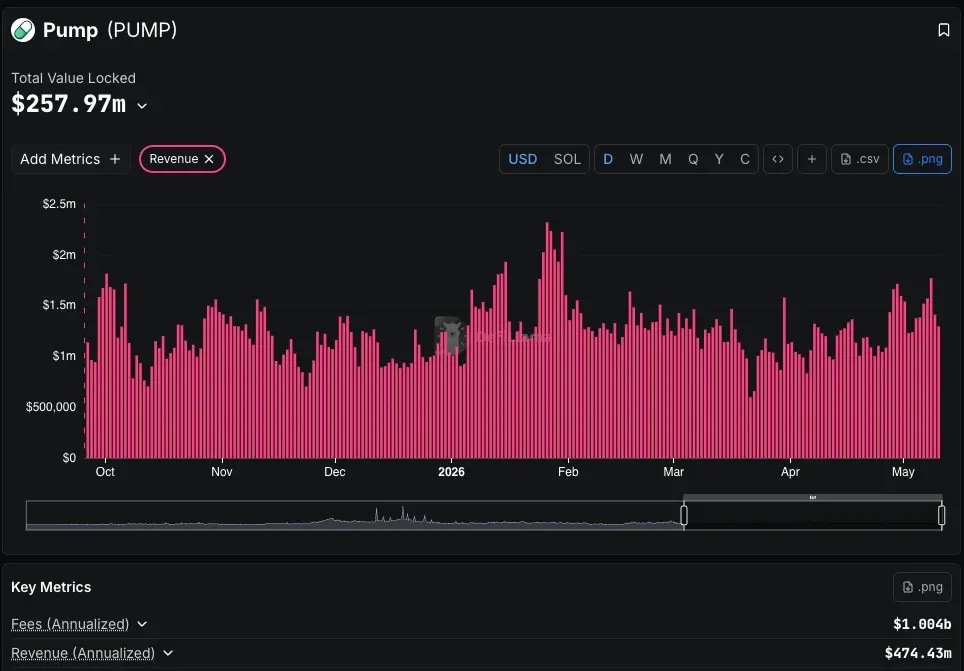
- pump.fun has made over $1 billion in fee revenue
- The US president Donald Trump launched his own memecoin on Solana
- Multiple memecoins have crossed $1B+ market caps
- And the volume is still there in May 2026, after all the crashes and cycles
But a Korean memecoin scene doesn’t really exist.
Korean retail traders only have options to trade US or Chinese memes.
But Korean retail is ripe for memecoins. The appetite is there. The meme-making instinct is there. The trading reflex is there.
Last week, a wolf named “Neukgu” (늑구) escaped from a Daejeon zoo and became national news. Within days, a Neukgu memecoin appeared on a DEX and reached $2M in market cap.
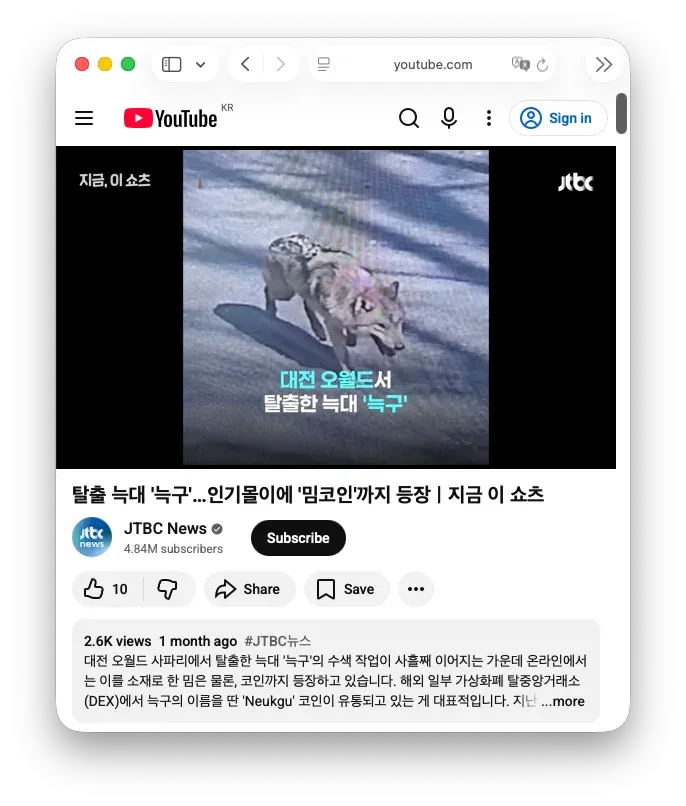
A Korean meme, a Korean trader’s instinct, tokenized in days. They just need a Korean-native platform to do it on.
Take Peanut the Squirrel, a massive memecoin at its peak, for example. To actually get why it mattered and became a national meme, you need to know US politics, JD Vance, Elon Musk, and the political narrative behind it. Korean traders are naturally at a disadvantage here compared to Westerners. I think that’s a big reason why memecoins never really took off in Korea.
Same story for Chinese memecoins on BSC. Their own memes, their own narratives, mostly illegible to Korean traders.
Crypto itself is global, but the users aren’t fully global. It’s the same pattern we already saw with the internet. Global in theory, but each country ended up with its own services. Google in the US, Naver in Korea, Baidu in China, Yandex in Russia. I think this is just human nature, and it will play out in crypto too.
And a Korean attention economy platform (a fancy name for a memecoin trading platform) does not exist yet. There’s a real opportunity sitting here, untouched.
Right now, the spotlight for Korean retail isn’t on crypto. The Korean stock market is on a crazy run and it’s eating all the attention. But attention rotates, and crypto will be hot again. It’s inevitable.
When it comes back, Kachi.xyz will be ready.
Why Now?
Giwa
Korea’s largest CEX, Upbit, is launching its own ETH L2: Giwa.
Giwa is built on OP-Stack, the same stack Coinbase used for Base. Upbit is running Coinbase’s playbook, and Coinbase’s playbook worked. Base went from zero to one of the most active L2s in under two years, pulling onchain millions of users who already trusted Coinbase.
Upbit has that same trust with Korean retail. Millions of Korean CEX users are about to be one tap away from onchain.
Every new chain ends up with one dominant DEX:
- ETH → Uniswap
- Optimism → Velodrome
- Base → Aerodrome
- Avalanche → LFJ (formerly Trader Joe)
- Solana → Jupiter & Meteora
There’s no Giwa equivalent yet. That’s the slot Kachi is going for.
And Kachi isn’t just a DEX. It’s launchpad and DEX in one. A pure DEX on a brand-new chain has almost nothing to trade. Maybe USDC/ETH and a handful of bridged blue chips, that’s it. The launchpad is what creates the supply of new tokens worth trading. Without your own pipe of fresh tokens, you’re fighting for crumbs on a few established pairs. With it, every new memecoin launches on your platform and trades on your platform. The two halves feed each other.
The launchpad will copy Pump.fun’s bonding curve mechanism, and the DEX will be a fork of Uni v2. “Graduated” pairs (tokens that hit a certain price threshold) will be migrated to Uni v2.
GasOK
Giwa just launched its incubator: GasOK.
I’ve been building Kachi since mid-2025 without a clear external catalyst on timing, until this.
What GasOK offers per selected team:
- Up to $100K (a $20K initial grant + up to $80K in KPI-based bonus grants)
- Cloud credits, RPC access, smart contract audits, AI tools
- VC introductions, PR support, Seoul office
- Exposure to Giwa’s 10M+ user base
- Demo Day at Korea Blockchain Week, October 2026
Tracks (up to 3 teams each): DeFi/RWA, Consumer/Social, GIWA-Native, AI/Web3, Mass Adoption.
Kachi fits cleanly into at least three of those: GIWA-Native (built specifically for Giwa), Consumer/Social (community feature), and DeFi/RWA (launchpad + DEX).
Why Kachi
Solana Integration
Even though Giwa is promising, it will take time to onramp users.
That’s where the Solana integration comes into play. By integrating Solana, Kachi can tap into Solana’s existing liquidity from day one.
Without it, Kachi would look dead at launch. Empty charts, thin volume, no traders. And nobody trades on a dead platform.
TossInvest’s UI/UX
Trading UI/UX matters, and Korea has a recent proof point.
Toss is Korea’s fastest-growing FinTech, and TossInvest (토스증권) is their stock brokerage arm. They’re a relatively new broker, but their monthly retail trading volume is enormous. They captured millions of Korean retail traders with a UI that feels native to Korean retail.
Korean retail traders already speak TossInvest’s UI vocabulary. Kachi’s trading interface is built on the same patterns. The learning curve is roughly zero for the audience we’re going after.
Korean-native onboarding
MetaMask is dead weight for the audience we’re trying to reach.
Korean retail traders don’t speak seed phrases. They speak Naver and KakaoTalk logins.
Kachi onboards with Google / Naver / Kakao OAuth. The wallet is auto-created on sign-in with Privy, you can export your private key anytime, and there’s no manual transaction approval every time you tap “buy.”
Self-custodial, but the friction layer of “set up MetaMask first” is gone. That’s the difference between an onchain product Korean retail might try once, and one they’ll actually use.
From exit liquidity to creators
For years, Korean retail has been the exit liquidity. By the time a memecoin reaches a Korean CEX, the 100x is almost impossible. The early DEX buyers are using the CEX listing to dump their bags. Korean retail is the one buying.
Kachi flips the script. Anyone can launch their own token on Kachi: your favorite meme, your community, your inside joke, the current thing.
Canonical community per token
Korean onchain traders already exist. I’ve met a lot of them while I was trading in the Solana trenches.
But they’re scattered across private Telegram groups, KakaoTalk chats, and Discord servers. Unlike Western onchain traders who organize on Twitter, Korean onchain traders are scattered across Telegram, KakaoTalk, private Discord servers, etc.
Kachi gives every token on the platform its own canonical community page: one public, gathered place per coin to talk shop, share charts, post memes. It’s TossInvest’s community feature, applied to memecoins.
And TossInvest’s community feature was key to their success (video, Edaily article).
They claim that it’s their actual moat. And I agree. So Kachi will benchmark TossInvest’s community features.
Speed
In memecoin trading, milliseconds count.
Kachi’s trading infrastructure is built in Rust, optimized for the high-frequency activity that token launches and sniping demand. Kachi’s goal is to provide a CEX-level trading experience.
Sustainability
A memecoin trading platform is a surprisingly sustainable business.
Revenue trajectories of the major onchain trading platforms (charts via DeFiLlama):
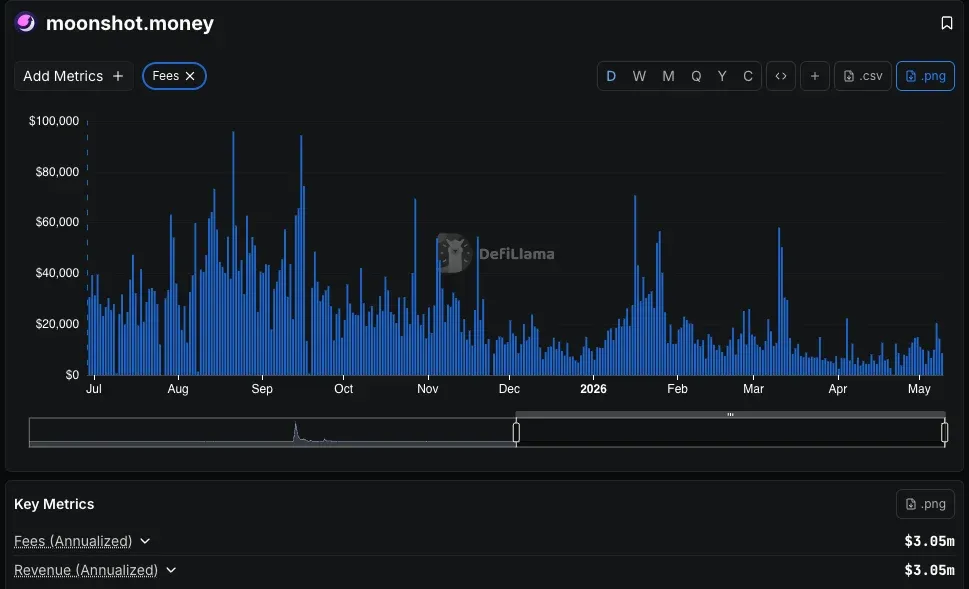
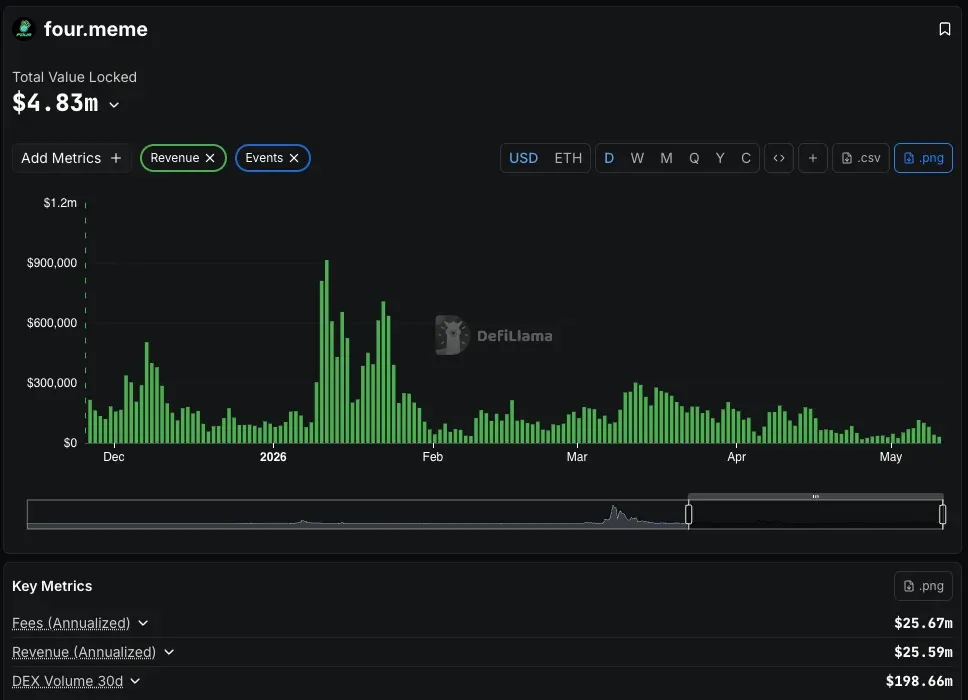
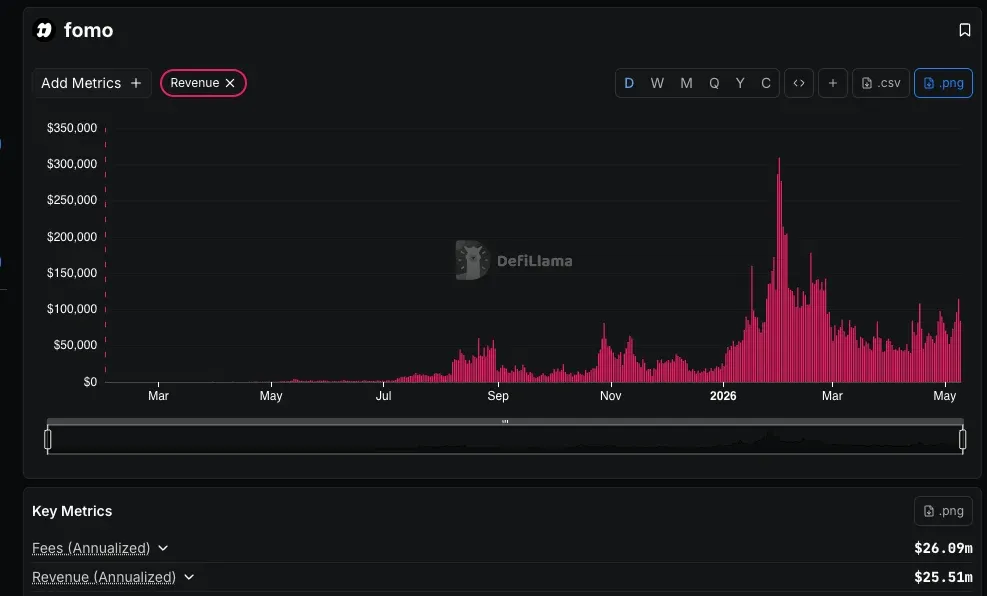
Unlike NFTs, the market is more liquid and sustainable.
Competitions
There’s no direct Korean competitor doing what Kachi does. But there are three categories of nearby players worth addressing honestly.
Geographic peers (same model, different region)
- Pump.fun: Solana, US/EN memes. The category-defining player.
- Four.meme: BSC, Chinese memes. Dominant in its region.
I’m not pretending Kachi can out-compete Pump.fun on Solana. That’s not the game.
The thesis of Kachi is that attention economies are geographic.
Korea has its own meme culture. That’s the slot Kachi occupies. Co-existence, not competition.
Aggregators and trading terminals
- Axiom, Photon, Bullx, Gmgn: Solana or multi chain terminal, superb trading performance for pro traders
- Fomo, Moonshot: mobile-first onchain trading
These wrap underlying liquidity and improve UI/UX, sometimes with a social feature (Fomo).
Each of them covers a slice of what Kachi does. None combine launchpad + terminal + community + Korean-native UX in one product.
The shortest way to describe Kachi: Pump.fun + Axiom + TossInvest, built for Koreans on Giwa.
Korean CEXes
- Upbit
- Bithumb
- Korbit
CEX listing is downstream. By the time a memecoin reaches Upbit’s main board, the 100x is long gone. Kachi is where the launches happen. Different point in the token lifecycle, different kind of user.
”What if Upbit just launches their own memecoin platform on Giwa?”
A few reasons I don’t think it happens:
Coinbase didn’t build Aerodrome. Coinbase built Base and let third parties own the DEX layer on top. That worked out fine for everyone. Coinbase captured value from chain activity, Aerodrome captured value from the DEX. Upbit running Giwa is the same playbook. They benefit from a thriving ecosystem on Giwa whether or not they own each app.
GasOK is the proof. Upbit literally launched an incubator to attract third-party builders to Giwa. If they wanted to build all the apps themselves, they wouldn’t be writing $100K checks to outsiders.
CEXes don’t run launchpads. The regulatory profile is different. Token issuance and token listing are two different conversations with regulators, especially in Korea.
Product
TODO will add more screenshots
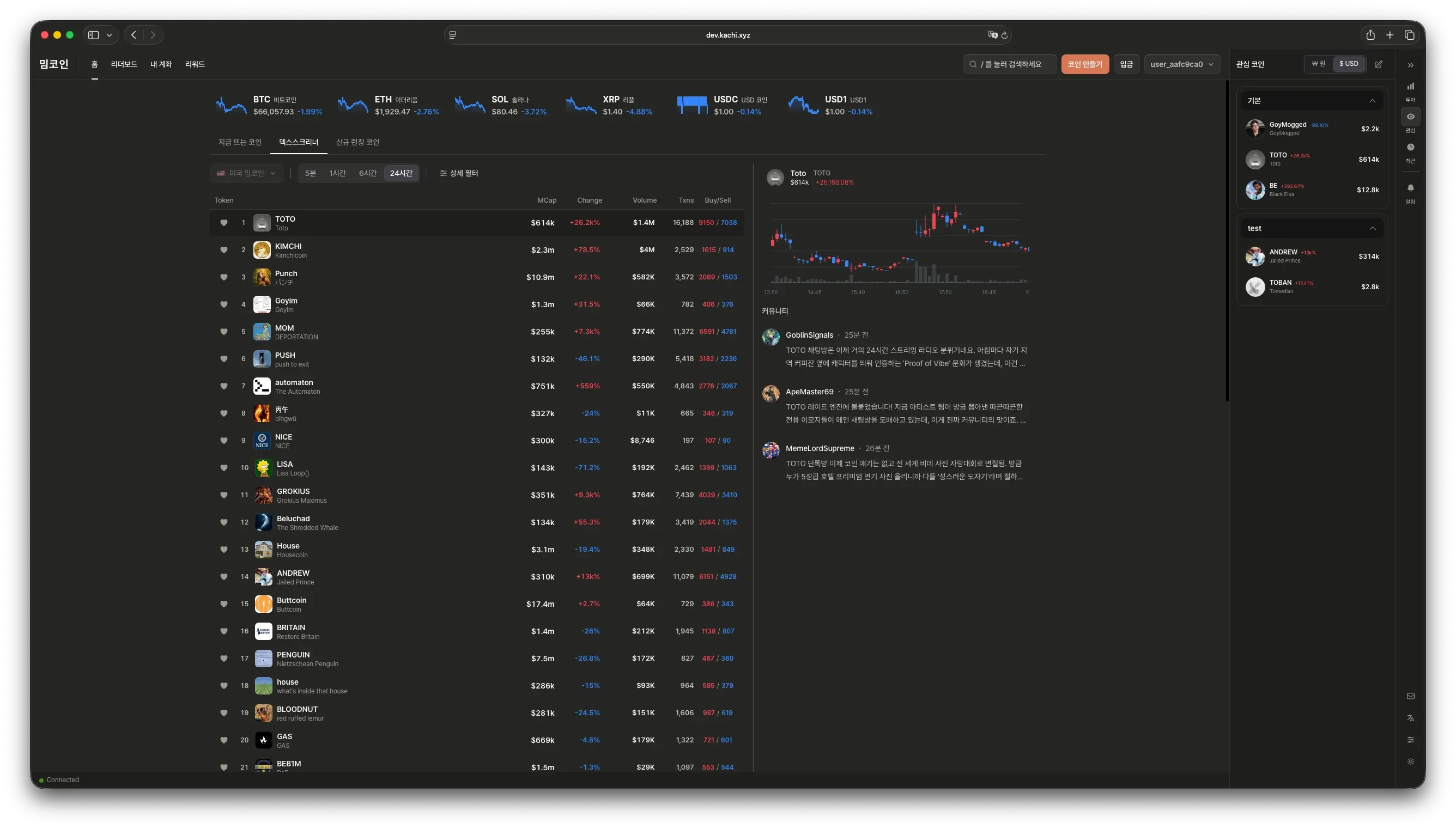
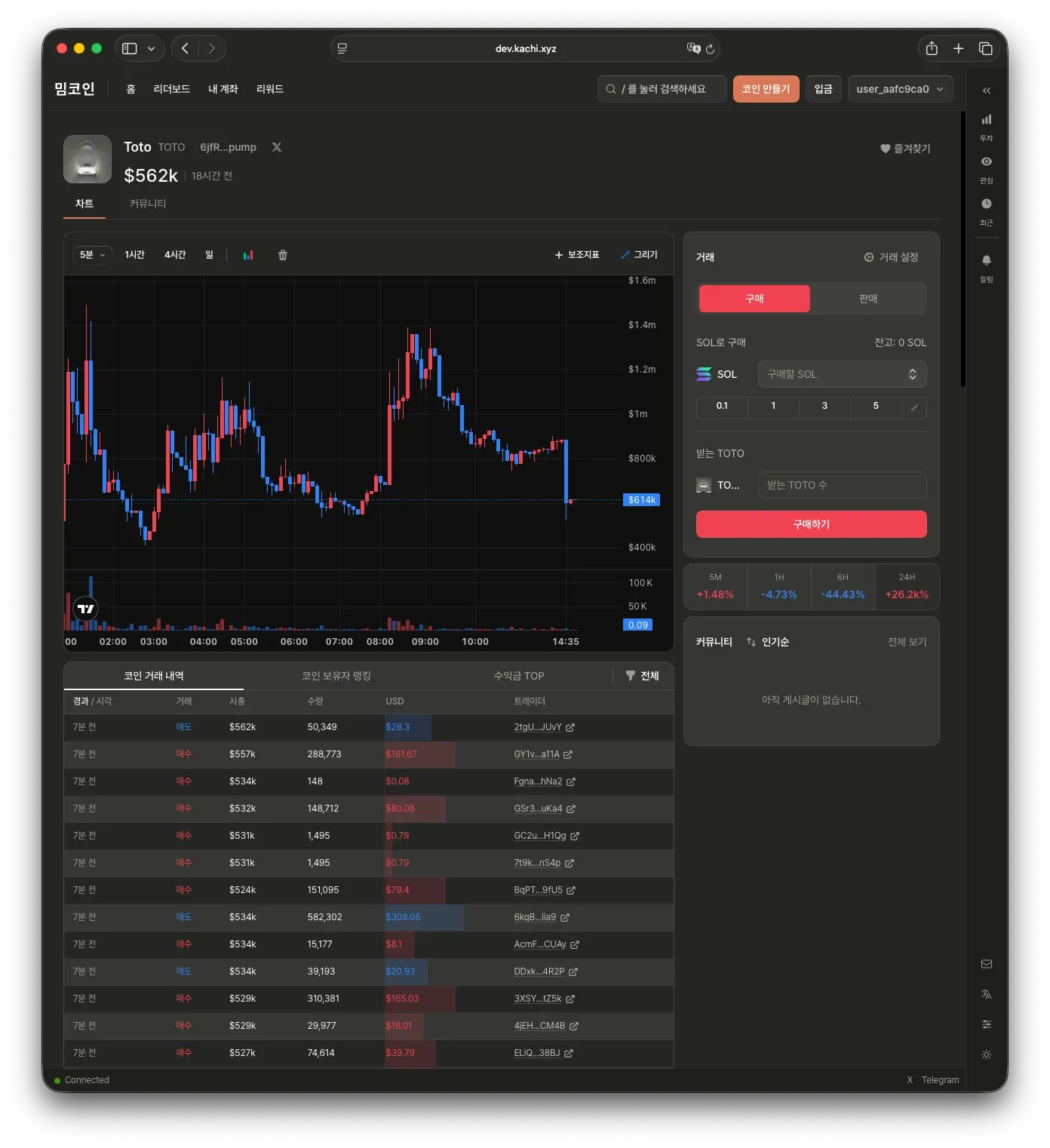
Dev version: https://dev.kachi.xyz
(I have been refactoring the backend, so it is down currently.)
Team
It’s just me, Jacob Kim.
I’ve been trading memecoins for a few years. Traded a lot, launched a few. I will dogfood my product.
At Krafton I worked on Settlus, an ETH L2 built with OP-Stack, the same stack as Giwa. So when Upbit’s chain lands, I’m not starting from zero.
Kachi is my project, and my baby. I have enough savings to focus on this without revenue for years, and I’m not planning on quitting.

It's an unimpressive-sounding word, but one of the most powerful motivations is the motivation of the hobbyist. That's what keeps successful founders working on their companies long past the point when they've made enough to quit. It's their beloved project.